


Engineering Biosensors and Bio-Interfaces to Improve Health and Combat Disease
Department of Engineering Physics and School of Biomedical Engineering
ABOUt us
The Soleymani group, under the leadership of Dr. Leyla Soleymani, a professor in the Department of Engineering Physics and the School of Biomedical Engineering, as well as the Associate Vice-President of Research (Commercialization and Entrepreneurship) at McMaster University, is dedicated to translational research in biosensors and bio-interfaces. The group aims to develop advanced miniaturized technologies for reducing the spread of diseases and improving health outcomes in humans and animals. We have established a thriving research environment by emphasizing trainee development, fostering collaboration, and prioritizing technology translation. Our team collaborates extensively with basic scientists, health scientists, clinicians, and industry partners to commercialize our laboratory discoveries.
Research

Rapid and Point of CAre Diagnostics
We are creating innovative strategies to integrate bio-recognition elements, primarily functional nucleic acids like aptamers and DNAzymes, with electrochemical and photoelectrochemical sensors. Our cutting-edge approach facilitates the detection of proteins, nucleic acids, and small molecules through simple, handheld, and cost-effective techniques. By collaborating with multi-disciplinary teams, we have developed advanced biosensors that enable rapid detection of viruses and bacteria, crucial for managing infectious diseases. Additionally, our technology allows for the sensing of biomarkers, such as Prostate-Specific Antigen (PSA) and tumor-derived exosomes, enhancing cancer diagnostics. These strategies deliver accurate results at the point of care, empowering timely and effective treatment decisions. We are actively pursuing partnerships aimed at commercializing these groundbreaking devices.
Wearable Sensors
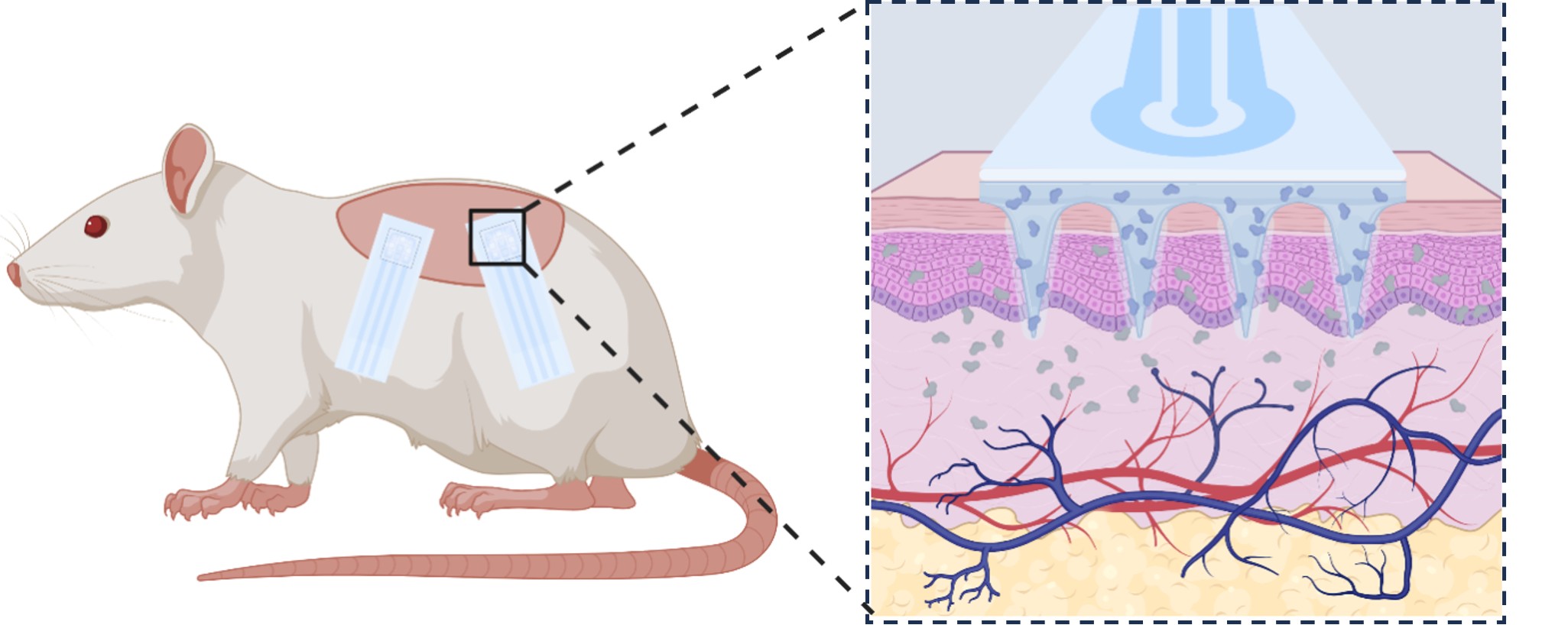
We are developing wearable biosensors that provide continuous monitoring of various biomarkers, essential for both disease management and health monitoring. By combining electrochemical sensors with polymer microneedles, we can capture health data in real time without invasive blood draws. These sensors are engineered to be rapid and non-invasive, enabling continuous health monitoring for a range of analytes beyond glucose. These devices aim to enhance patient care and health outcomes. We are pursuing opportunities to develop a new generation of marketable technologies in this field.

Smart Surfaces
We are developing multi-functional smart surfaces designed to repel contamination, perform sensing functions, and eliminate pathogens. For instance, a category of bio-inspired surfaces utilizes structures at the micro- to nano-scale to achieve omniphobicity, effectively repelling various types of liquids and minimizing surface contamination from bacteria and viruses. Our ongoing research aims to enhance the efficiency of these surfaces, broaden their applicability to a wider array of contaminants, and facilitate their integration with medical devices and biosensors. We are building on our success in commercializing the initial version of these devices while actively seeking further opportunities for technology translation in this field.
Designed with WordPress